Frac tanks: what they are, their capacity and when to rent one

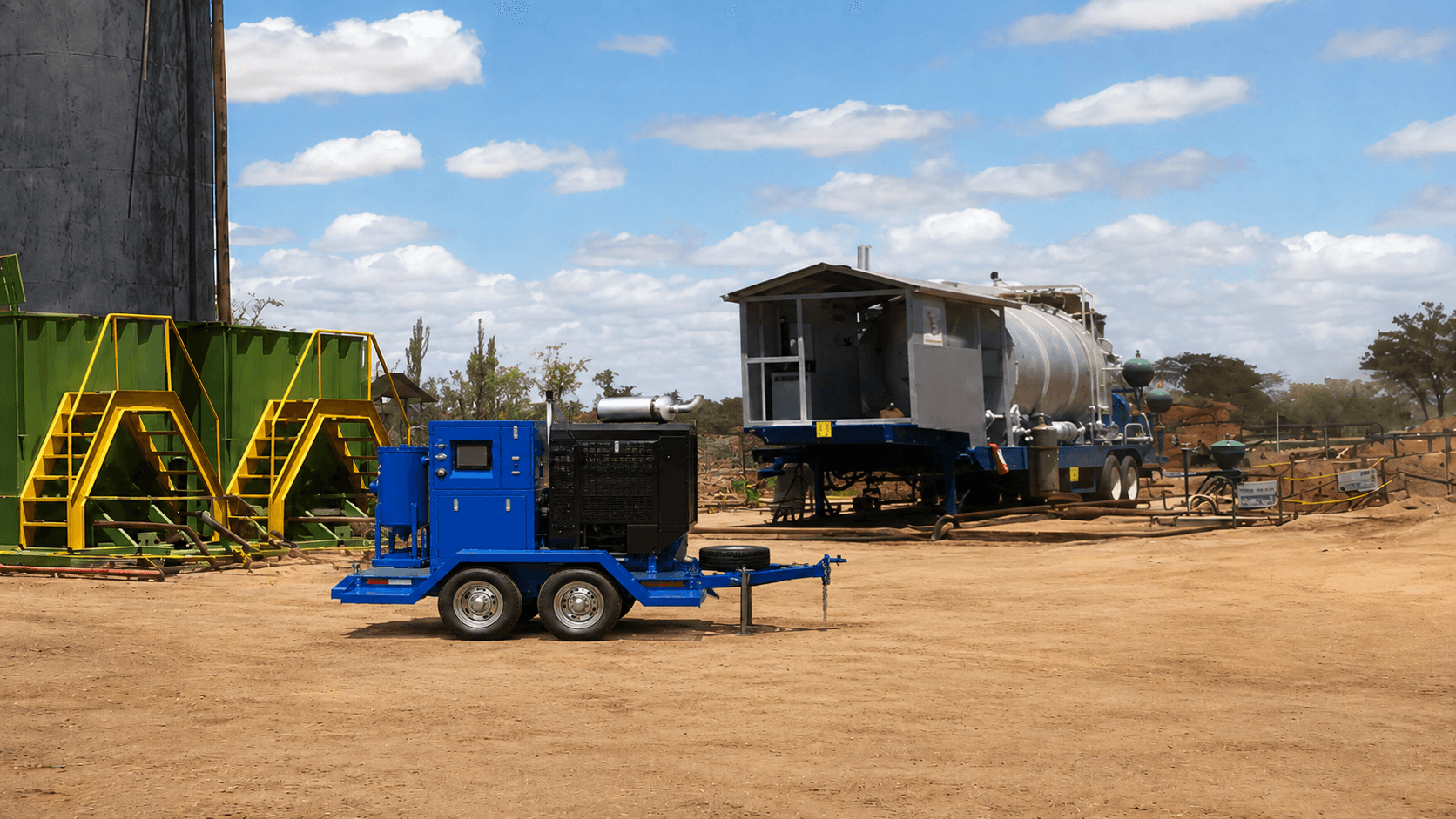
A frac tank is a temporary storage tank mounted on a wheeled chassis, designed to arrive at a site, hold fluids during an operation and leave when the work is complete. Its name comes from hydraulic fracturing, but it is now used throughout the industry for crude oil, water, mud, chemicals and fuel.
How much does a 500-barrel frac tank hold?
The industry standard is 500 barrels, approximately 79,500 liters per unit. A typical frac tank measures 14 meters long, 2.60 meters wide and 2.70 meters high, weighs around 10 tonnes empty and supports up to 15 tonnes of load. It is moved using a lowboy or flatbed, supported by a single axle and kingpin.
When more capacity is needed, tanks can be interconnected in a battery: ten units provide 5,000 barrels of storage without civil works.
Four configurations and their uses
Not all frac tanks are the same. The right configuration depends on the fluid:
- V-Bottom: a V-shaped floor concentrates solids and allows complete emptying with a vacuum truck. It is suitable for heavy crude containing sediment.
- Flat Bottom: a more economical flat-floor design for clean fluids such as boiler feedwater.
- Insulated: insulated walls retain the temperature of crude oils that need heat to remain fluid.
- Gas Tight: a sealed design for fluids whose vapors or gases must not be released.
When renting makes more sense than installing fixed tanks
Renting is advantageous when storage is temporary or the site changes. Common applications include:
- Flowback and produced water during well testing or stimulation
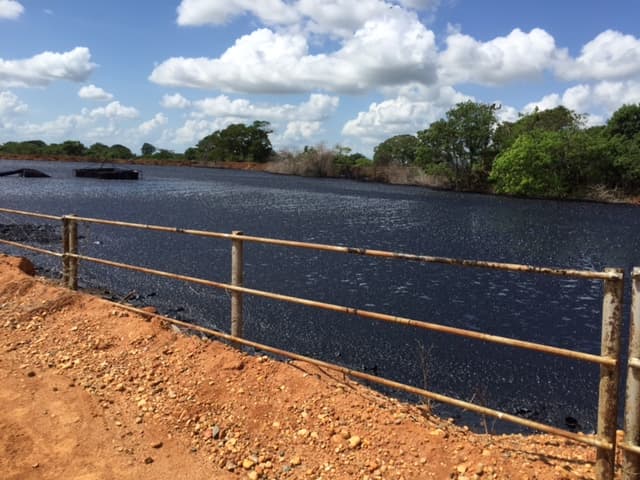
- Storage of oil recovered during pit cleanup and soil remediation
- Wash-water or process-fluid reserves during plant shutdowns
- Temporary replacement while a fixed refinery tank is cleaned or repaired
- Fuel or chemical reserves at remote sites
What to check before renting
Three questions cover most requirements: which fluid will be stored (determining configuration), peak storage volume (determining tank count), and how the tank will be emptied (determining whether you need a V-Bottom and vacuum service). Also check the available connections—ours include two 4-inch, one 8-inch and one 12-inch connection at the front, plus a 4-inch rear drain—and certified butterfly valves.
Rentals are often combined with oil pumping to fill the tanks and vacuum service for final cleaning, allowing one provider to cover the entire operation.
Frequently asked questions
How many barrels does a frac tank hold?
The standard is 500 barrels (approximately 79,500 liters). Interconnected tank batteries increase capacity in direct proportion to the number of units.
How is a frac tank cleaned after use?
A vacuum unit removes residue from the bottom, then pressurized water washes away what remains and the tank is vacuumed again. This takes 1 to 3 hours depending on accumulated sludge.
Can a frac tank store boiler feedwater?
Yes, in a Flat Bottom configuration, which helps avoid contamination from bottom particles. Water for steam generators requires high purity.