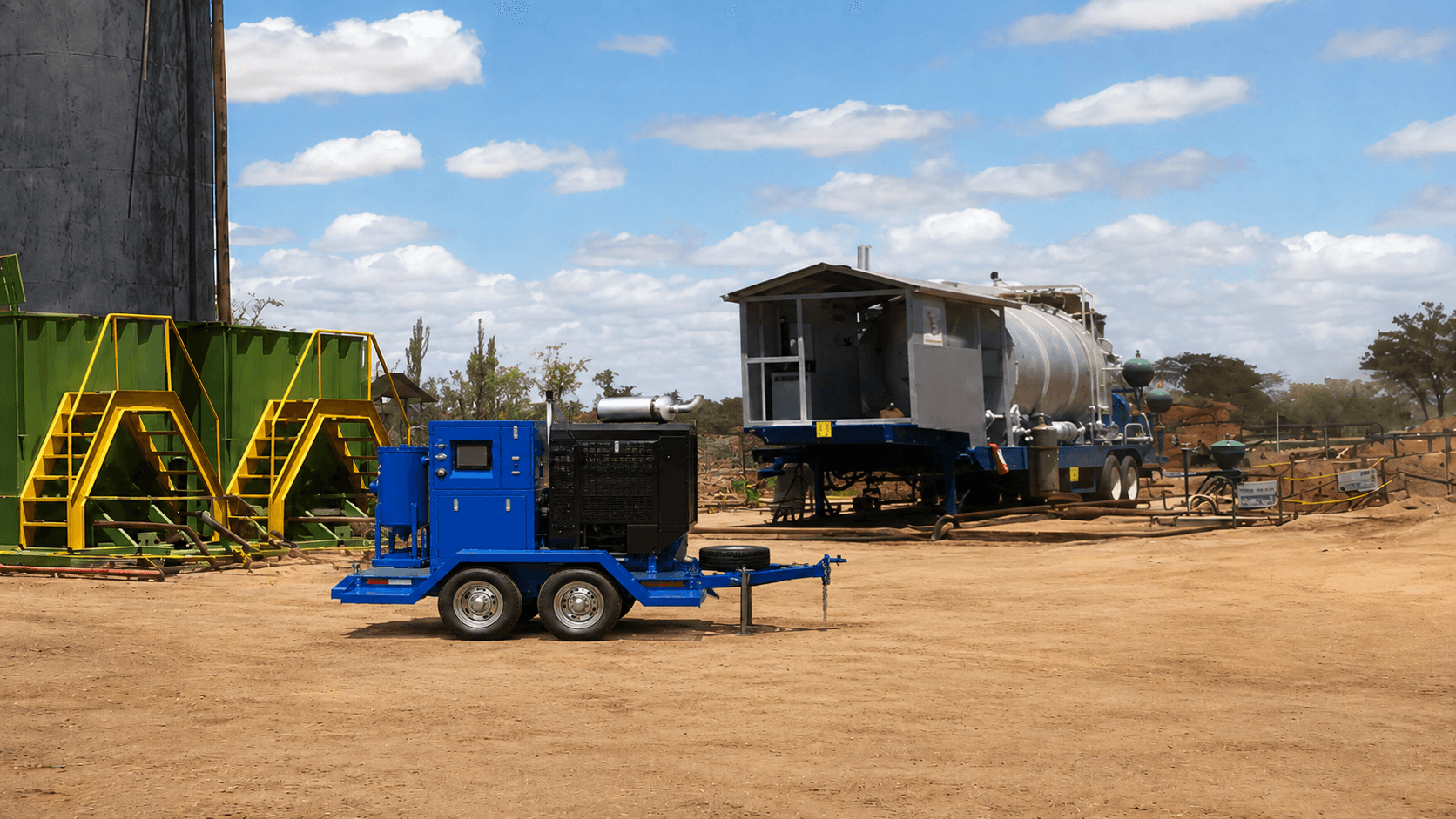
What is a vacuum truck and how is it used in the oil industry?

A vacuum truck, also known as a suction truck or vacuum unit, is a vehicle fitted with a sealed tank and a compressor that creates a vacuum to remove fluids that conventional pumps struggle to handle: tank sludge, drilling mud, water containing solids and spilled crude oil.
How a vacuum truck works
The vacuum compressor is the heart of the unit. When it starts, it draws air out of the tank to create negative pressure. Opening the suction valve allows atmospheric pressure to push the fluid through the hose into the tank. This enables a vacuum truck to draw material from a pit, tank bottom or confined space without a pump coming into contact with it.
Our unit, for example, uses an NVE Challenger 607 compressor rated at 380 CFM, reaching a vacuum of 29 inHg, on a 160-barrel (25,440-liter) semitrailer manufactured in 2026. The same compressor reverses the flow to discharge the contents under pressure at the disposal site.
Which fluids can an oilfield vacuum truck remove?
It is designed for the most challenging materials in oil and gas operations:
- Asphaltic sludge and bottom sediment from crude oil storage tanks
- Water-based or oil-based drilling and completion mud
- Produced water with high concentrations of solids and sediment
- Spilled heavy and extra-heavy crude oil or oil accumulated in pits
- Industrial effluent, contaminated stormwater and tank-cleaning residues
Vacuum truck or pump: which should you use?
A conventional pump moves fluid using positive pressure and requires the material to flow to its suction inlet. A vacuum truck works differently: it draws material into its tank, making it suitable for semisolid materials, enclosed spaces and remote suction points. Screw pumps suit liquid crude in open pits; vacuum trucks suit sludge, thick mud and tank bottoms.
Many operations use both: the vacuum truck removes sludge and waste while a pump transfers the recovered oil into frac tanks or tankers.
When to hire a vacuum truck service
The most common reasons clients in Zulia and throughout Venezuela call us:
- Cleaning storage tanks before inspection or repair
- Removing drilling mud and cuttings at drilling sites
- Remediating oily pits and spill-affected areas
- Transporting produced water and effluent to injection wells or treatment plants
- Supporting hydrojet industrial cleaning by removing the resulting waste
Safety and documentation
A properly operated vacuum truck protects personnel by keeping them out of direct contact with the fluid. The unit must have a grounding system (essential for volatile fluids or the presence of H2S), leak-tight valves, calibrated pressure and vacuum gauges, and certified couplings. Each operation must end with discharge at an authorized site and, where applicable, the waste manifest required under Decree 2635.
Frequently asked questions
How long does it take to fill a 160-barrel vacuum truck?
For water-based fluids or light mud, between 45 and 90 minutes. Asphaltic sludge or highly viscous materials may take 2 to 4 hours, depending on suction distance.
Can a vacuum truck work with volatile gases or H2S?
Yes, provided it has certified grounding, leak-tight valves and personnel with respiratory protection. Our unit operates under these protocols.
What happens to the material the truck removes?
It depends on the material: reusable fluids go to storage tanks, produced water goes to authorized injection wells, and hazardous waste goes to certified final disposal facilities with a waste manifest.