Hydroblasting vs sandblasting: which to use in refineries and plants
Both techniques remove rust, paint, coke and hardened deposits. The difference is the medium: sandblasting propels abrasive material using compressed air, while hydroblasting uses only water at 20,000 and 40,000 PSI. In a refinery or active drilling location, that difference determines which process can be used.
The key advantage: cold work without sparks
Sandblasting generates frictional heat, sparks and airborne abrasive dust. In a hazardous area containing hydrocarbons, this presents an ignition source and exposes the operator to silica dust. Water cutting produces neither sparks nor heat, making it the specified approach in refineries and active drilling locations for surface preparation and line clearing without stopping nearby operations.
What each pressure does
20,000 and 40,000 PSI serve different purposes:
- 20,000 PSI (PARTEK unit, 10–13 GPM): high flow for industrial washing, severe rust removal and internal cleaning of heat exchangers and pipes, where water volume and impact provide the cleaning action
- 40,000 PSI (UHP unit, 3–6 GPM): concentrated cutting power for concrete hydrodemolition, heavy epoxy coating removal and abrasive-free stripping
- Rotating nozzles with sapphire or industrial diamond inserts, and self-propelled nozzles for internal pipe cleaning without dismantling
Waste: the other difference
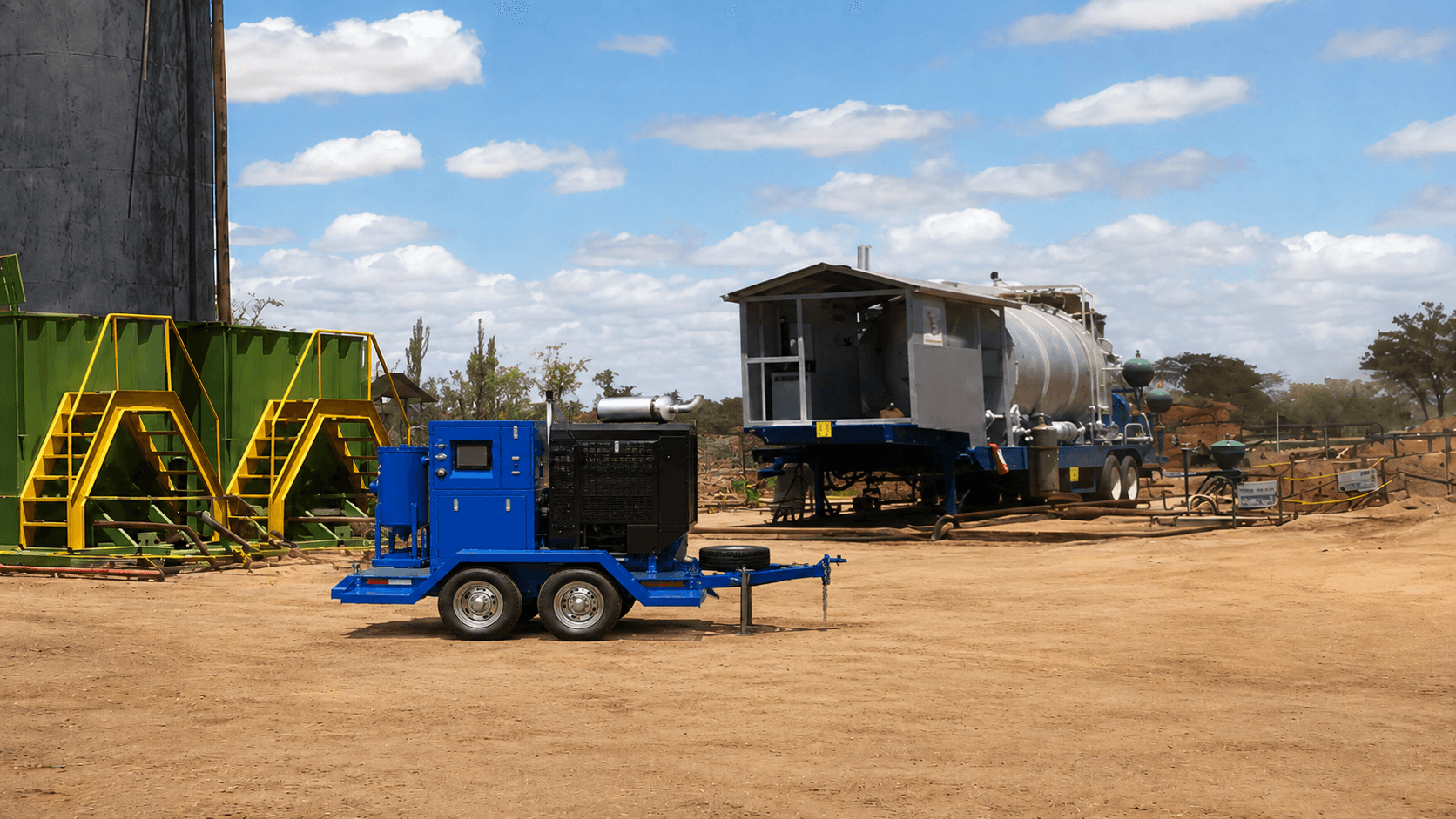
Sandblasting leaves tonnes of abrasive contaminated with the removed paint or product, which must be collected and disposed of. Hydroblasting produces only water and detached residue, immediately removed by a 160-barrel vacuum unit and managed under RACDA requirements. This means less volume, less handling and a clean work area on completion.
When sandblasting is still appropriate
For new structures outside hazardous areas, when a specific coating anchor profile is required, abrasive blasting remains valid and can be faster. As a practical rule, ultra-high-pressure water is the safe choice when hydrocarbons are nearby, equipment must be protected or work takes place in confined spaces.
Personnel safety
At 40,000 PSI, a water jet can cut metal. Crews therefore use certified full Kevlar/Dyneema suits, boots with metatarsal protection, full impact visors and reinforced gloves. Hoses have whip restraints, and pneumatically controlled guns release water at zero pressure when the trigger is released. An HSE supervisor marks the exclusion zone and manages work permits.
Frequently asked questions
Does hydroblasting damage the base metal?
No. Pure water removes deposits or coatings without wearing away the metal substrate, unlike abrasives, which erode it.
Can you clean a heat exchanger tube bundle?
Yes, using rigid lances and semiautomated positioners that keep the operator out of direct exposure, together with the higher-flow 20,000 PSI unit.
What happens to the water and residue from cleaning?
They are immediately removed with a 160-barrel vacuum unit. Hazardous residue is handled through our waste management service under Decree 2635.