Oilfield services in Venezuela
Waste Management
Every waste movement documented and certified.
Drilling mud, produced water, contaminated soil and asphaltic sludge, with full traceability.
From Zulia, for all of Venezuela.

The service
From characterization to final disposal
Responsible industrial waste management is both a legal obligation and a commitment to the environment and the communities where we operate. We provide collection, transport and final disposal coordination for all types of waste generated by oilfield operations.
Discuss your operation with our teamHow we work in the field.
Discover the stages and equipment involved in this operation.
We characterize and classifyTechnical capability
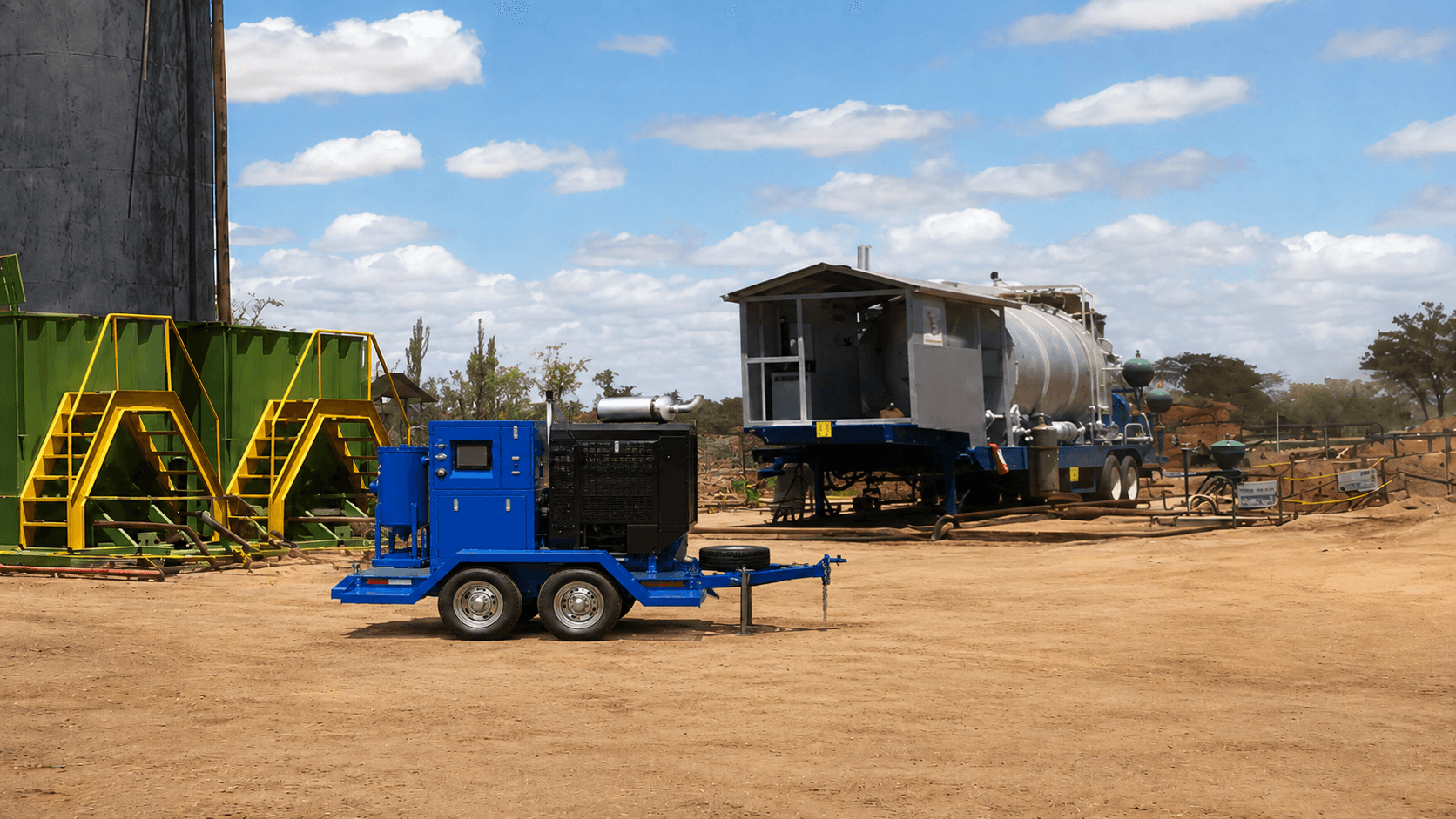
The equipment behind the service.
Review the specifications and scope to plan your operation.
- Legal compliance
We operate under Venezuela's Decree 2635 to prevent environmental penalties and ensure the legality of your operations.
- Complete traceability
Each waste stream has a transport manifest and final disposal certificate, with records from its point of origin.
- Complete service
From collection to final disposal, one provider for the entire waste management chain.
- Environmental responsibility
We minimize environmental impact with certified handling techniques and responsible disposal.
Technical specifications
Soluciones Delta C.A.- Legal framework
- Venezuelan Decree 2635
- Hazardous waste
- Classifications A and B
- Transport
- Sealed units
- Documentation
- Manifest + Certificate
- Water-based muds
- ✓ Included
- Oil-based muds
- ✓ Included
- Asphaltic sludge
- ✓ Included
- Contaminated soil
- ✓ Included
Equipment availability and service conditions are confirmed when quoting.
Plan your operation
Applications and scope.
Information about the process, fluids, safety and resources supporting this service.
Venezuelan legal framework
We operate in compliance with Venezuela's Decree 2635 on the classification and handling of hazardous waste or materials, the Organic Environmental Law and applicable COVENIN standards. Every operation produces complete traceability documentation.
Type 1: Drilling and completion muds
Drilling muds are the most common waste from well interventions. They contain a complex mixture of chemical additives (bentonite, barite, polymers), formation water and drilled rock solids.
- Water-based muds (WBM): easier to handle, with lower environmental impact
- Oil-based muds (OBM): require special handling due to hydrocarbon content
- Synthetic-based muds (SBM): handled similarly to OBM
- Drill cuttings: solids contaminated with hydrocarbons
- Process: vacuum suction → transport → thermal or biological treatment
Type 2: Produced and industrial water
Produced water is the largest-volume byproduct of oil extraction. It is highly saline and may contain heavy metals, dissolved hydrocarbons and naturally occurring radioactive materials (NORM).
- Formation water: high salinity (10,000–300,000 ppm TDS)
- Steam condensate: a mixture of softened water and formation water
- Industrial drainage: minor spills and equipment wash water
- Recommended process: reinjection into authorized wells or physicochemical treatment
- Documentation: physicochemical analysis, transport manifest and disposal certificate
Type 3: Contaminated soil and drill cuttings
Accidental spills of crude, fuel or chemicals produce contaminated soil requiring remediation. Drilling also generates rock cuttings contaminated with drilling fluids.
- Oil-contaminated soil: saturation from spills at wellheads, pipelines or tanks
- Chemical-contaminated soil: acids, biocides and surfactants
- Drill cuttings: contaminated with OBM or WBM
- Remediation methods: landfarming, biopiles and ex-situ treatment
- Applicable standard: COVENIN 3386:2003 for soil remediation
Type 4: Asphaltic sludge
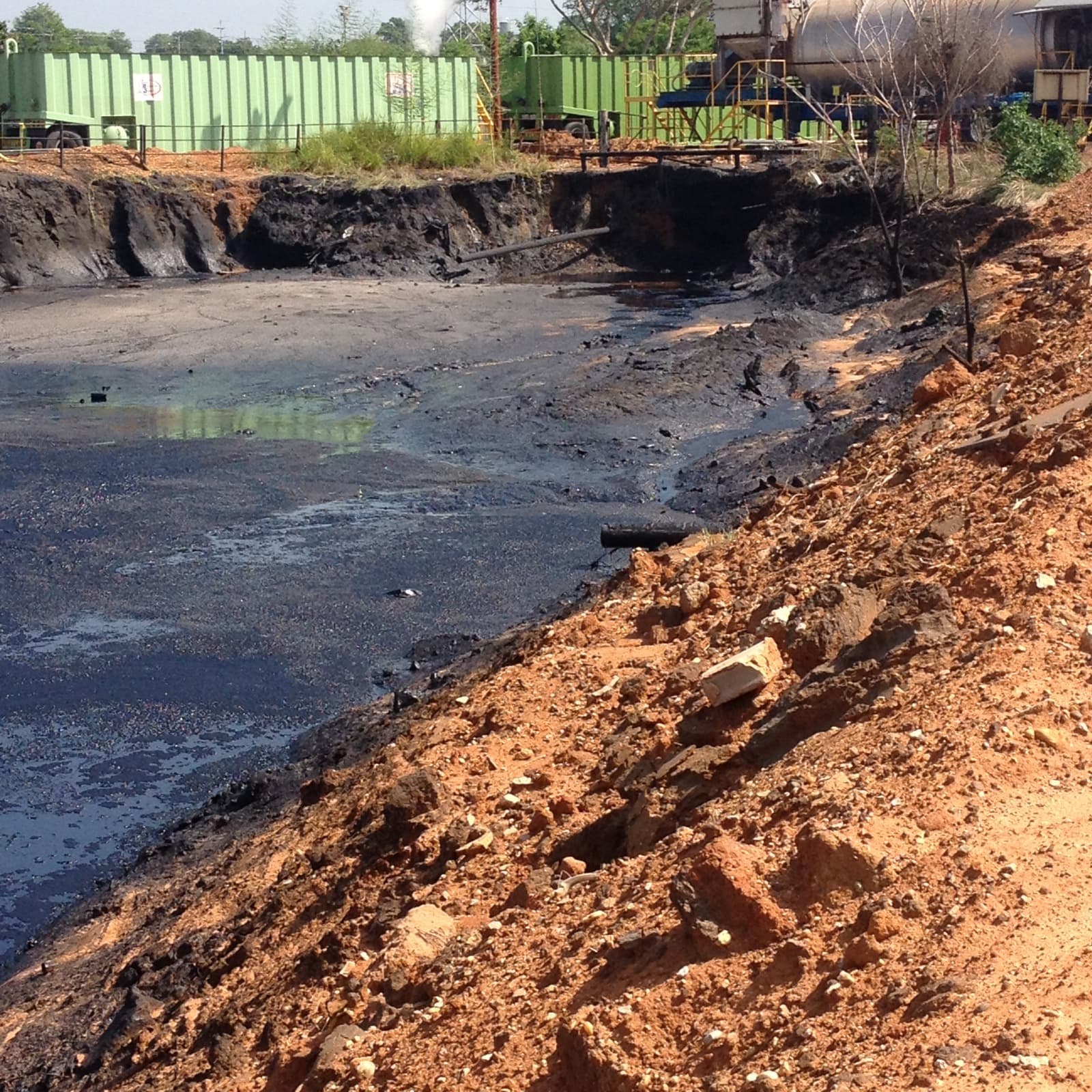
Asphaltic sludge is among the most difficult residues to handle in heavy crude operations. It accumulates at the bottom of frac tanks, pipelines, separators and process equipment, forming a solid or semi-solid layer that is difficult to extract.
- Composition: asphaltenes + paraffins + sediment + emulsified water
- Common locations: frac tank bottoms, pipeline flanges and separators
- Extraction method: heating to fluidize the material + vacuum truck
- Final disposal: co-processing in cement plants or industrial incineration
- Typical volumes: 5–50 Bbl per 500 Bbl tank, depending on storage time
Integrated management process
Our service covers the complete waste management chain:
- 1. On-site waste characterization (type, volume, hazards)
- 2. Classification under Decree 2635 (hazardous, non-hazardous, special)
- 3. Collection using a vacuum unit or appropriate equipment
- 4. Packaging and labeling in accordance with transport regulations
- 5. Transport in a sealed unit with a waste manifest
- 6. Delivery to an MPPEA-authorized final disposal facility
- 7. Delivery of a disposal certificate to the client
What is Decree 2635 and why is it important?
Decree 2635 is the Venezuelan regulation governing hazardous waste classification and management. Non-compliance can lead to fines, shutdowns or criminal liability. Our service ensures that waste is handled in accordance with this regulation.
Can you handle waste containing H2S?
Personnel use H2S detection equipment (4-gas monitors) and air-purifying respirators with hydrogen sulfide cartridges. All procedures follow PDVSA standards for confined spaces and toxic fluids.
Do you issue final disposal certificates?
Yes. Each hazardous waste operation produces a waste manifest covering origin, transport and destination, and a final disposal certificate from the authorized receiving facility. These documents are provided to the client for their records.
What if the asphaltic sludge is very solid?
For highly solidified sludge, we preheat it with steam or hot water to fluidize the material before suction. This increases extraction efficiency to more than 95% of the total volume.
Complete your operation.
All services
Let's talk about your project
Your next operation starts here.
Tell us where and when you need the service. Our team will help define the equipment and scope.
+58 424-6472446Support from San Francisco, Zulia.