Heavy oil skimming and pumping: how a screw pump works
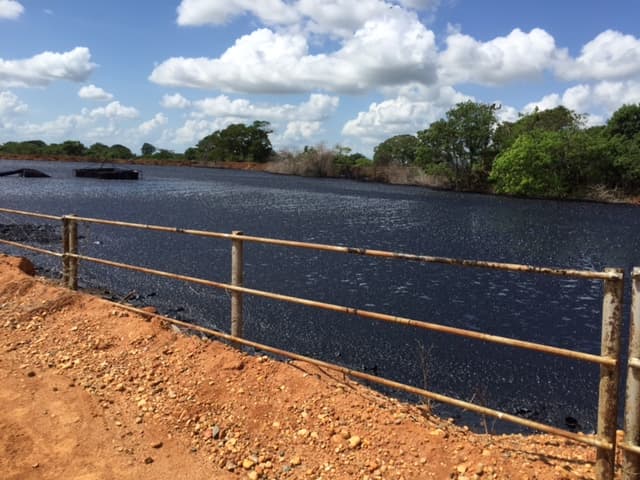
Skimming removes the layer of lighter crude oil floating on water in a production pit while minimizing water pickup. Effective skimming depends on a collection plate that captures only the upper layer and a pump that moves the oil without shearing or mixing it.
What is the floating oil layer and why skim it?
In production pits, lighter crude separates by density and forms a floating layer locally known as natilla. Pumping from the bottom carries water and sediment into the tank, creating an emulsion that requires longer and more costly dehydration. Skimming captures the upper layer with minimal additional liquid.
The equipment: separate hydraulic drive and screw pump
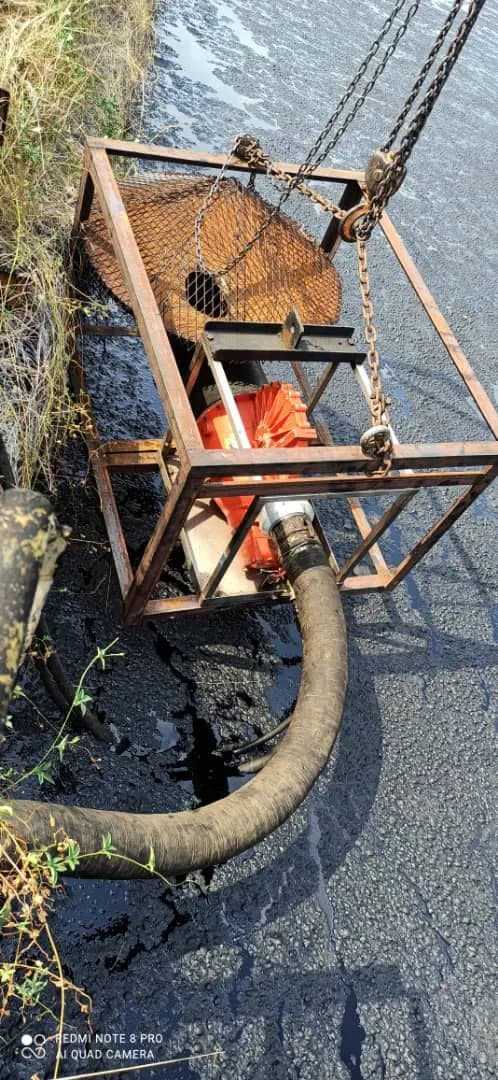
The system comprises a hydraulic power unit and a screw pump coupled to a hydraulic motor:
- A 15,000 PSI hydraulic power unit with variable motor pressure from 0 to 10,000 PSI according to crude viscosity
- A screw pump that moves the fluid without shearing it, preserving its physical properties
- Separate power and pump units connected by hydraulic hoses: the pump sits at the oil source while the power unit stays in an accessible area
- A steel skimming plate that captures the floating oil layer
- Discharge through a 6-inch hose into 500-barrel frac tanks or tankers
- A 400 kVA electrical generator and an operational support trailer on site
Why avoiding emulsification matters
A centrifugal pump agitates and mixes oil with water, creating emulsions that later require heat or chemicals to break. A screw pump moves fluid in a smooth, continuous motion, so the crude reaches the tank in the same condition it left the pit. This makes it easier to separate, dehydrate and dispatch.
Capacity and other uses
Nominal capacity is 1,500 barrels per 24 hours, adjustable to process requirements. Multiple units can run in parallel for higher volumes. The same system transfers oil between frac tanks and tankers, loads transport fleets, recirculates oil with diluent or naphtha, handles effluent water and supports steam injection operations.
Operational safety
Each job begins with a task risk assessment, equipment grounding, certified hydraulic hoses, and pressure and leak checks before startup. A technical supervisor remains on site, and transferred volumes are measured and reported each shift.
Frequently asked questions
Can the same equipment handle extra-heavy crude and effluent water?
Yes. Variable hydraulic pressure from 0 to 10,000 PSI adapts the screw pump to fluids ranging from light produced water to highly viscous, low-API crude.
How much can the system move in a shift?
Up to 1,500 barrels per 24 hours, adjusted to the process. Several units can operate in parallel for higher volumes.
Why is the power unit separate from the pump?
This allows the pump to reach difficult-access pits while the power unit stays in a safe, open location, connected by hydraulic hoses.